
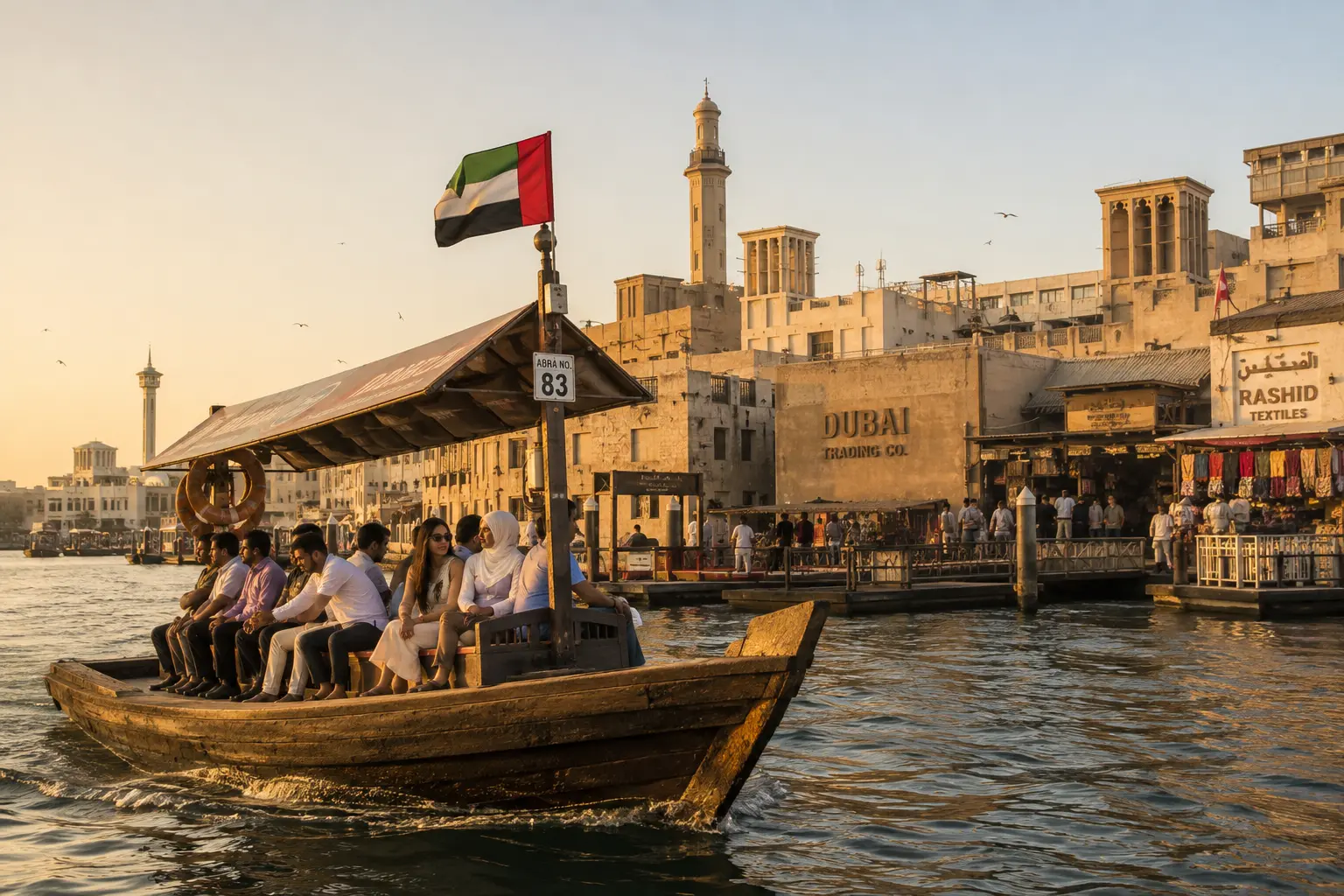
A Dubai Creek abra ride can be one of the smallest costs of your holiday and one of its nicest memories. You sit on a small wooden passenger boat, cross between two busy banks and watch Old Dubai from the water. You do not need to turn it into an expensive cruise to enjoy it.
The part that confuses visitors is the name. Dubai has several abra services, and they do not all follow the same route or charge the same fare. This guide focuses on the traditional public Creek crossings that RTA currently lists at AED 1 per passenger, per trip. Save the two station names you need before you leave.
The short answer: which Dubai abra costs AED 1?
RTA's Old Dubai route page, checked on 25 October 2026, lists two traditional crossings at AED 1 per passenger for each trip. CR1 links Bur Dubai Abra Station with Deira Old Souq Abra Station. CR2 links Dubai Old Souq Abra Station with Al Sabkha Abra Station. The page specifies cash payment for these routes.
That is a crossing fare, not a day pass and not a private boat price. If four people each make one outward crossing and one return crossing at AED 1, the total for those eight passenger trips is AED 8. Travel to the station, food and any other activity are separate costs.
Understand the two sides of Dubai Creek
Bur Dubai and Deira sit on different sides of this part of the Creek. Al Fahidi and Al Seef are on the Bur Dubai side. The Gold Souk and Spice Souk are on the Deira side. An abra can join parts of a walking visit without making you go around by road.
Think of the boat as a small public transport connection with a lovely view. You choose the station pair because of where you want to finish. Picking a boat only because it is nearest can leave you farther from your next stop. The words “Old Souq” appear in more than one station name, so read the whole name.
CR1: Bur Dubai to Deira Old Souq
This is a useful station pair to investigate if your plan combines the Bur Dubai waterfront with the Deira market area. Check the walking route from your current location to Bur Dubai Abra Station, then from Deira Old Souq Abra Station to your chosen market entrance. Do not confuse it with a station whose name begins Dubai Old Souq.
You can cross in either direction when the service is operating. A one-way ride does not require you to return from the same place, but you still need a plan for the end of your day. Save the arrival station as well as the departure station so that your group can recognise where it is going.
CR2: Dubai Old Souq to Al Sabkha
CR2 uses a different station pair. It may suit a route involving another part of the old market area or a different onward connection. Check a current map rather than assuming it lands at the same point as CR1. Even a modest difference in landing location matters when you have children or limited walking time.
The fare can be the same while the most useful route is different. Ask the station staff if you are unsure which service matches your destination. Show the saved station name on your phone. This is clearer than asking for “the cheap boat”, because that phrase does not explain where you want to go.
Abra timings: check the route, not a general opening hour
RTA's current route page lists CR1 from 06:00 until midnight and CR2 as a 24-hour service. These are the published route windows checked for this guide. Conditions and service changes can still affect a journey, so consult the current RTA information and the station's signs before relying on a late crossing.
A boat service operating late does not mean every nearby shop, museum or café stays open as well. Plan the whole outing around the places you want to visit. If your main aim is shopping, use the shops' actual hours. If your main aim is photography, choose daylight or evening for the scene you prefer.
Leave room for a queue
The crossing itself is short, but your visit includes walking to the landing, waiting, boarding and leaving at the other end. Do not measure the full journey by the time the boat spends moving. A short queue can matter when you have a restaurant reservation or a booked tour across the Creek.
Keep the next activity flexible if you are visiting at a busy time. A relaxed market walk after the crossing is easier to manage than a tight appointment several streets away. For the return, check your onward Metro, bus or taxi plan as well. The boat is only one part of getting back to your hotel.
How to pay for the traditional Creek crossing
For the AED 1 routes described here, carry small cash. RTA's published page says cash only. Do not arrive expecting your nol card or a bank card to cover every type of abra in Dubai. Other marine services can have different arrangements, which is another reason to confirm the route before boarding.
Keep the crossing money easy to reach so you do not have to search through a bag at the landing. Follow the staff's instructions about when and how to pay. For a family, know how many passengers you are paying for and ask about any passenger-specific rule at the station rather than assuming an attraction's child policy applies.
A simple cost example
Suppose two adults each make one AED 1 crossing from Bur Dubai to Deira and return on an AED 1 crossing. That is four passenger trips, or AED 4 in boat fares. If they buy drinks or take a taxi afterwards, those costs sit outside the crossing calculation. Keeping them separate makes the budget easier to understand.
If you choose a private charter, a longer ride or another route, start a new calculation using that service's quoted price. A large sign advertising a private boat is not evidence that the public crossing now costs that amount. Ask which option is being offered before agreeing to it.
Getting to the correct abra station
Start by choosing the bank where your walking visit begins. If you are exploring Al Fahidi first, you are already planning around Bur Dubai. If your first stop is the Gold Souk, start on the Deira side. Your hotel location and public transport connection may make one direction easier than the other.
Use the current RTA journey planner for the full station address. Metro stations serving Old Dubai can still be a walk from a particular landing. Do not assume a Metro exit opens directly onto your boat. Check the pedestrian route, road crossings and heat before deciding how far everyone will comfortably walk.
Arriving by taxi
Show the driver the exact station pin, including the side of the Creek. A request for “Dubai Creek” covers a large area and may send you somewhere unsuitable for the crossing. If a narrow lane is not a suitable drop-off, agree on a nearby legal stopping place and walk the final part.
For your return, choose a pickup point where a taxi can actually stop. Standing beside a waterside landing does not guarantee road access. Save a nearby public landmark before you board, particularly if you are travelling with someone who cannot comfortably search for a car after a long walk.
What happens when you reach the landing?
Look at the station name and current service signs first. Check the destination with staff if anything is unclear. Keep your group together while waiting and let arriving passengers leave before moving forward. Boats and boarding areas are working transport spaces, so follow the crew's directions rather than trying to create your own boarding order.
Wait until the crew indicates it is time to step aboard. Keep hands free where possible and secure loose items. Sit where directed, keep children close and avoid moving around for photographs during the crossing. If you need help, ask before boarding so staff can explain what is possible for that vessel.
Strollers and access needs
Do not assume a traditional wooden boat has the same boarding arrangement as a modern step-free ferry. Ask about the actual gap, step and assistance before committing to the journey. Someone travelling with a wheelchair, walking aid or large stroller should check the service directly and have an alternative land route available if needed.
A general statement that an area welcomes families is not an access guarantee for every boat. Explain your practical need: whether a stroller folds, whether the passenger can transfer and whether steps are manageable. Clear questions let the operator give a useful answer rather than a broad promise that may not suit your group.
What you will see from the water
The appeal of this ride is the change of viewpoint. The market streets and waterfront buildings become a scene across the water. You may notice other passenger boats, working vessels and people moving along the banks. It is a small piece of the city carrying on with its day, not a staged show.
Look at both banks before choosing which way to face for a photo. You cannot guarantee an empty boat or a particular seat on a shared crossing. Keep your phone secure and avoid leaning out. A short video from your seat can capture the movement without making you miss the whole ride through a screen.
Make it interesting for children
Before boarding, explain the simple task: “We are taking this boat to the other side.” Ask children to spot the station they are leaving or compare the buildings on each bank. Keep the activity calm and seated. The short journey can be enjoyable without asking a young child to understand every part of the area's history.
After landing, let children choose a small next step, such as a drink break or a look at a market window. This helps the ride feel like part of a shared outing. Avoid promising that every market stall will have a free sample or a gift; those are individual businesses with their own choices.
A simple plan linking the crossing with Old Dubai
Option one: Bur Dubai first
Begin with a manageable walk around Al Fahidi or the Bur Dubai waterfront. Choose one main cultural stop rather than trying to enter every building. Then follow your saved route to the correct abra station. Cross to Deira and continue to the Spice Souk or Gold Souk according to your interests and the opening hours.
Finish with food and a planned departure from Deira, or return across the Creek if that suits your hotel journey. This option works best when you accept that the two sides need walking time. Do not treat a map pin for Al Fahidi as the boarding location itself.
Option two: Deira first
If your transport brings you to Deira more easily, start with the market area and cross afterwards. This can make sense when you want the shops during their trading hours and a quieter cultural walk later. Confirm that any museum, gallery or café you want on the Bur Dubai side will still be open.
Our Dubai Creek and souks walking itinerary gives a wider route idea. For a different nearby waterfront, see the Al Seef Creek walk guide. Use the actual abra station names in this article to join the areas, rather than assuming every waterfront has the same crossing.
Public abra, private abra or dinner dhow?
The public crossing takes you between named stations with other passengers. A private abra charter is a separately priced service for a longer or more personal trip. RTA's current page lists private charter references of AED 60 for 30 minutes and AED 120 for an hour; confirm availability, boat and final terms before arranging one.
A dinner dhow is another product again. It is a larger planned evening with a boarding time, meal arrangements and a specific vessel. See our Dubai Creek dinner cruise if dinner on the water is your aim. It should not be described as the AED 1 crossing with food added.
A Fountain Lake Ride in Downtown Dubai is also different from a Creek crossing. So is an abra experience at another resort or attraction. The word abra describes a boat type or experience; the location, route and product terms tell you what you are actually buying.
Choose a comfortable time and pack lightly
A daylight trip makes it easier to recognise stations and see the details on both banks. A later visit changes the light and can fit a market evening. Check the weather and season before choosing. The ride may be brief, but the walking before and after can involve exposed streets.
Take comfortable shoes, water, sun protection for daylight and small cash. A charged phone with saved station pins is useful even if you plan to ask staff. Carry shopping in a secure bag that you can manage while boarding. Large or awkward purchases may be easier to collect after the boat ride.
Keep your day flexible without losing the important details
You do not need a minute-by-minute schedule for a small crossing. You do need the station pair, operating window, payment method and onward destination. Those four details prevent most avoidable confusion. Save them together in one note so another person in your group can find them if your phone battery runs low.
If you want a guided visit, compare the route and inclusions in our city tour options. Ask whether an abra ride is actually included, which crossing is used and whether fares are covered. A tour mentioning Dubai Creek may only stop for a view. Written inclusions are more useful than a broad attraction list.
Plan a crossing for a mixed group
If some people want to shop and others mainly want the boat ride, agree on the next meeting point before splitting up. A message saying “meet at the market” is too broad. Choose a named public landmark, give everyone its pin and decide how long to wait. Keep children with their responsible adult throughout.
Someone who does not want to board can still enjoy a Creek-side walk. However, leaving one person on the opposite bank creates a second route to manage. Discuss this before paying or entering the boarding line. It is easier to adjust the outing while everyone is together than to solve it after the boat has left.
For a group with a timed activity later, work backwards from that meeting time. Add the onward walk, a reasonable wait at the station and the journey to your final stop. Then set a latest time to leave the market. This keeps a simple crossing from becoming the reason you rush the rest of the day.
Finally, put one adult in charge of the shared crossing money if that suits your group. Count passengers together and follow the staff's payment directions. Keeping the fare simple leaves more attention for boarding carefully and enjoying the view.
10 frequently asked questions about Dubai Creek abra rides
1. How much is the traditional Dubai Creek abra?
RTA currently lists CR1 and CR2 at AED 1 per passenger, per trip. That is a single crossing fare. Other routes, private charters and sightseeing products can cost more, so check the service name before boarding.
2. Can I use a nol card for the AED 1 crossing?
RTA's page specifies cash only for the traditional crossings described here. Carry small cash rather than assuming a nol card or bank card will work. Payment rules for other marine services can be different.
3. What stations does CR1 connect?
CR1 connects Bur Dubai Abra Station and Deira Old Souq Abra Station. Save both complete names. Check the current walking route from the arrival landing to your next stop instead of treating every Old Souq station as the same place.
4. What stations does CR2 connect?
CR2 connects Dubai Old Souq Abra Station and Al Sabkha Abra Station. It uses a different station pair from CR1. Choose it because those landings suit your route, not simply because the fare is the same.
5. Do abras operate all night?
The current RTA page lists CR2 as a 24-hour service and CR1 from 06:00 to midnight. Check current notices and conditions before a late journey. Nearby shops and public transport can have different hours.
6. Does an AED 1 ticket include the return trip?
No. The fare is per passenger for each trip. A return crossing is another paid trip. Four passengers crossing out and back on AED 1 services would make eight passenger trips, costing AED 8 in crossing fares.
7. Is the abra suitable for young children?
Families can ask the operator about the service and boarding arrangements for their children. Keep children beside an adult and follow crew instructions. Do not assume attraction-style age discounts or stroller access without checking at the actual station.
8. Is a Creek abra the same as a dhow cruise?
No. The public abra is a short crossing between stations. A dhow dinner cruise is a separately booked evening product with its own vessel, meal, departure time and boarding point. Choose the service that matches your aim.
9. Can I combine the abra with the Gold Souk?
Yes, a Deira landing can form part of a visit to the Gold Souk and Spice Souk. Check the precise station and onward walk. Allow time for the shops and your return journey rather than planning only the boat crossing.
10. Do I need to book the public crossing in advance?
The traditional crossing is a public transport service rather than a timed sightseeing attraction. Follow the station's current boarding and payment arrangements. Private charters, guided tours and dinner cruises are different services and may require advance reservations.
Want help joining a Creek visit with another part of your holiday? Contact Friends Guide Travels with your hotel area, date and preferred pace. Ask for a clear route and the exact inclusions of any guided option.
Sources checked 25 October 2026: RTA traditional abra routes, fares and published operating windows and Visit Dubai's Creek crossing overview. Follow current RTA notices and crew instructions on the day.