
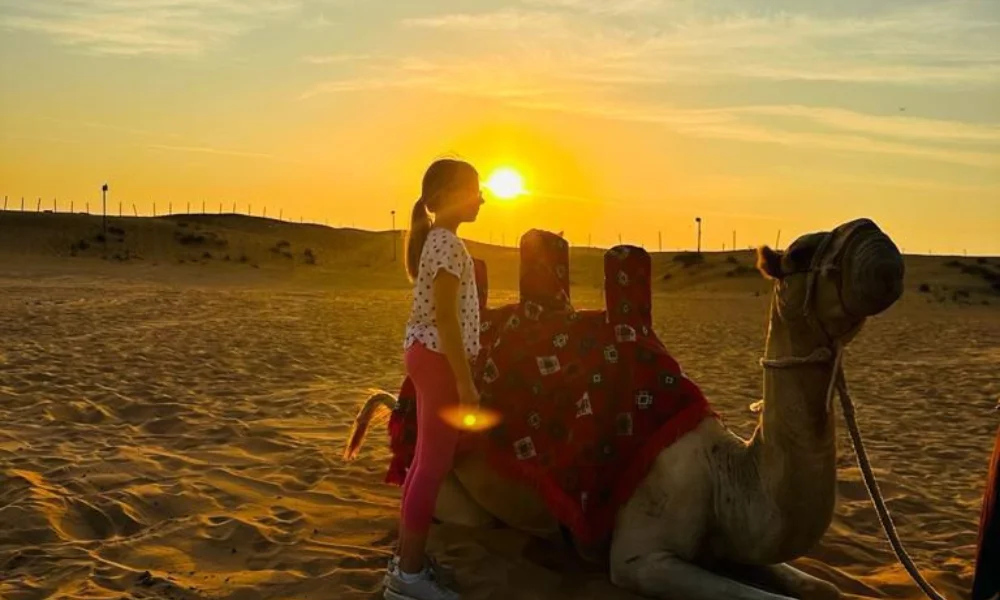
Good Dubai desert safari photos start with a simple plan. You do not need a large camera bag or a long list of poses. A clean phone lens, a few clear ideas and enough time at the agreed photo stop can make your pictures feel more personal.
Choose a trip that fits the scenes you want. The red dune safari focuses on a sand-dune setting, while the evening safari can also include a camp programme. Confirm the actual stops instead of assuming every photo in an advert is taken on every departure.
Plan five different pictures
- A wide view with plenty of sand and sky.
- A portrait with a dune ridge behind the person.
- A small detail, such as footprints or patterns in the sand.
- A group photo that includes everyone travelling together.
- An evening picture showing the camp atmosphere.
This short list gives you variety without making the whole outing a photo session. Take the group picture early so nobody spends the rest of the stop waiting for it.

Use the light you have
At the photo stop, look at where the sun falls on faces. If someone is squinting, turn slightly or choose a different angle rather than asking them to stare into bright light. Tap the face on your phone screen and adjust brightness until both the person and background look clear.
At sunset, take several frames as the light changes. A silhouette can work when a person stands against a bright sky, but it will not show facial details. Take a separate portrait if you want both kinds of memory. The safari timing guide helps you choose between morning and evening plans.
Keep phone pictures sharp
Clean the lens before you begin. Hold the phone with both hands, keep the horizon level and use a short timer for a group picture if a stable, permitted place is available. Try moving closer on foot within the safe area instead of using heavy digital zoom.
For camp photos after dark, pause for a moment before pressing the shutter. Bright lights and moving performers can blur easily. A few careful pictures often work better than filming the whole evening while watching it through a screen.
Protect equipment from sand
Bring a small closed pouch and keep loose accessories inside it. Do not place a phone directly on a dune for a low-angle picture. Sand can reach ports and lenses quickly, especially when the wind picks up. Change camera lenses only in a suitable sheltered place.
Wear clothes you can walk and sit in comfortably. The safari packing list is a useful starting point. Large props and several outfit changes take up vehicle space and need prior agreement.
Photograph people with care
Ask before taking close pictures of other guests, staff or performers. Follow the camp's photography rules and keep clear of active vehicles and animal handlers. A good angle never requires stepping into a driving route or climbing onto equipment.
Tell Friends Guide Travels if photography is your main reason for booking. Ask about photo-stop time, group size and any separate professional photography service. A standard safari should not be described as a private photo shoot unless that service is confirmed.
Frequently asked questions
Do I need a professional camera?
No. A phone can capture useful wide views, portraits and details when the lens is clean and the light is considered.
Can I ask for extra photo time?
Ask before booking. Extra time or a special route may require a different arrangement.
Are professional photographs included?
Only if the selected package says so. Check the number of images, delivery method and any extra cost.
Can I bring a drone?
Do not assume a safari permits drone use. Obtain the required permissions and operator agreement before bringing one for use.