
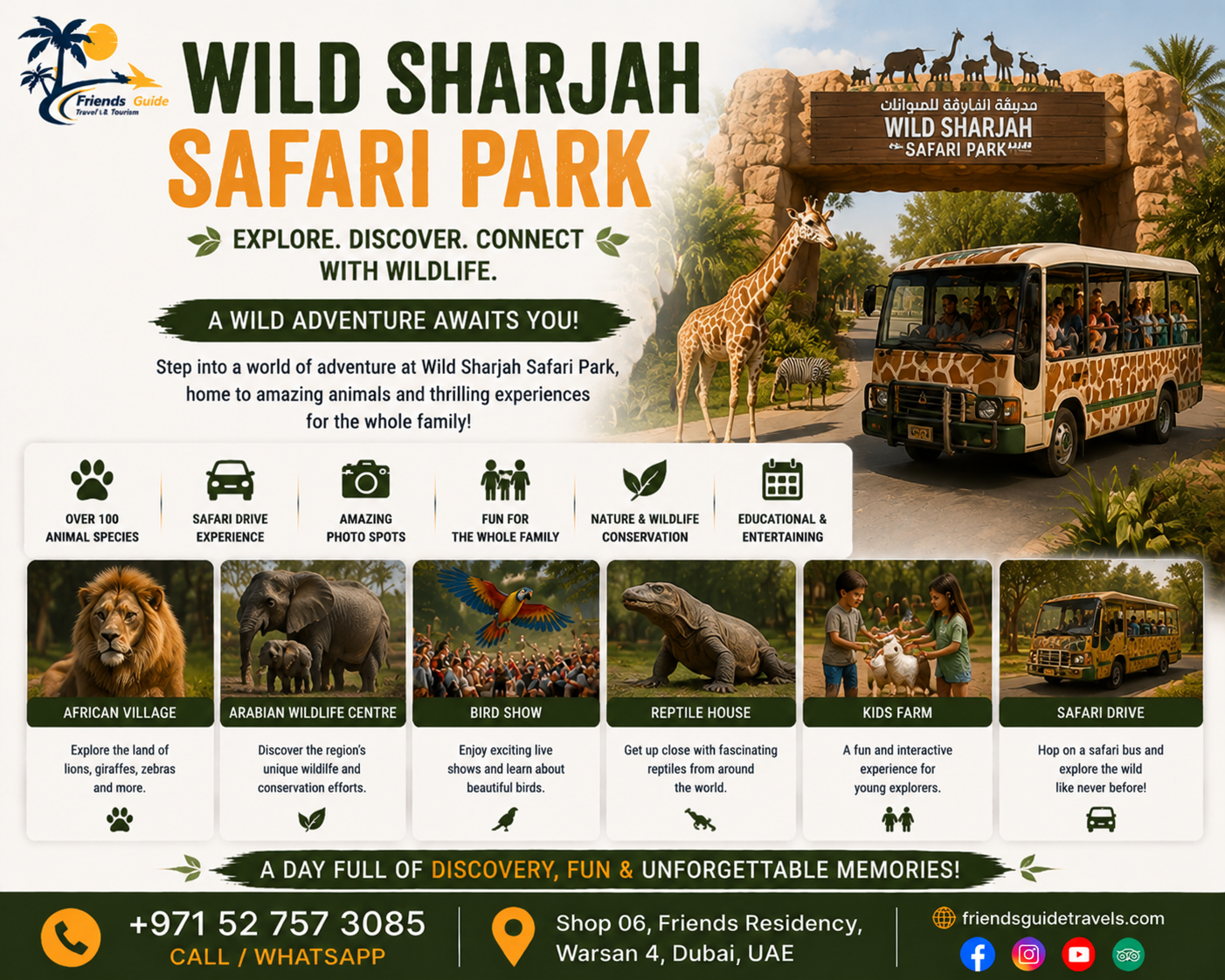
Wild Sharjah Safari Park offers visitors the opportunity to experience African-inspired landscapes, observe magnificent animals and learn how wildlife depends on healthy natural habitats. Located near Al Dhaid in Sharjah, the attraction is designed as an immersive safari journey rather than a traditional row of small animal enclosures.
Visitors may encounter giraffes walking across open areas, elephants gathering near water, lions resting in the shade, rhinoceroses exploring spacious habitats and colourful birds moving between trees and wetlands. The experience combines family entertainment with education, conservation awareness and responsible wildlife observation.
This complete guide focuses on the wild side of Sharjah Safari Park. It explains the animals, African-inspired environments, natural behaviour, conservation value, family experience and important rules that help visitors enjoy the attraction responsibly.
What Animals Can You See at Wild Sharjah Safari Park?
Sharjah Safari is home to more than 120 African wildlife species. Visitors may see lions, African elephants, giraffes, black and white rhinoceroses, crocodiles, antelopes, gazelles, lemurs, tortoises, reptiles and many bird species. The animals visible during each visit depend on the selected route, weather, season and natural animal behaviour.
Safari Location Al Bridi Nature Reserve near Al Dhaid, Sharjah
Safari Area Approximately eight square kilometres
Habitats 12 environments inspired by regions of Africa
Wildlife More than 120 reported animal species
Wild Sharjah Safari Park Guide
- The wildlife experience
- African-inspired habitats
- Large safari animals
- Birds and smaller animals
- Understanding animal behaviour
- Wildlife conservation
- Safari routes and tickets
- Family wildlife experience
- Best time to visit
- Wildlife photography tips
- Wildlife attraction comparison
- Frequently asked questions
What Makes Wild Sharjah Safari Park Special?
Sharjah Safari Park is designed to introduce visitors to the landscapes and wildlife of Africa without leaving the UAE. Its large habitats use open ground, trees, rocks, water, grass and shaded areas to create environments where animals can move and behave more naturally.
The attraction is different from a normal zoo visit. Depending on the chosen package, guests may begin with walking areas and then continue through larger habitats in a safari vehicle. This allows visitors to observe wildlife across wider spaces while listening to information provided by a guide.
Sharjah Safari also encourages visitors to notice more than famous animals. Trees, wetlands, insects, reptiles, birds and small mammals all help create a complete ecosystem. Understanding these connections makes the experience more meaningful.
A Safari Is Not a Stage Show
Wild animals decide when to walk, rest, feed, socialise or remain away from the visitor route. No responsible wildlife attraction can guarantee that every animal will be active or clearly visible during every journey.
Explore 12 African-Inspired Environments
Sharjah Safari contains 12 environments inspired by different parts of Africa. Each area represents a particular landscape, climate or ecosystem. Public access to individual areas may depend on the selected ticket and current safari route.
Into Africa
The introductory walking environment highlights wildlife connected with islands and coastal areas along eastern Africa. Visitors may notice birds, tortoises, lemurs and smaller species among carefully planted surroundings.
The Sahel
The Sahel represents the dry transition between the Sahara Desert and greener savannah. Animals living in this environment must adapt to seasonal food, limited water and changing temperatures.
The Savannah
Open grassland, scattered trees and grazing animals create the classic African safari appearance. Visitors may observe how different species use shade, open ground and vegetation.
The Serengeti
Inspired by famous East African plains, this environment helps explain the relationship between grazing animals, predators, seasonal movement and water sources.
Ngorongoro
This area is inspired by the diverse ecosystem around the Ngorongoro region, where grassland, water and protected terrain support many large animal species.
Moremi
Wetland and woodland influences help visitors understand how rivers and seasonal water affect the movement, feeding and survival of African wildlife.
Additional environments and visitor areas may represent other African regions, cultural settings and rest locations. Routes, names and public access can change, so the current booking confirmation should always be treated as the final guide.
Famous Animals at Sharjah Safari Park
Large mammals receive the most attention because of their size, power and beauty. However, every species plays a different role in the wider ecosystem.
African Elephants
African elephants are among the most impressive animals at Sharjah Safari. They are intelligent, social and strongly connected to their family groups. Visitors may observe elephants walking together, gathering near water, using their trunks to explore or standing in shaded areas.
Elephant behaviour can teach visitors about communication and family structure. Adults may protect younger members, while trunks are used for drinking, touching, smelling and collecting food.
Giraffes
Giraffes are easily recognised by their height, patterned coats and long necks. Their bodies are adapted for browsing leaves from trees that many other grazing animals cannot reach.
Watching a giraffe walk slowly across open ground is one of the most memorable moments for many families. Visitors may also observe giraffes standing together or using their long tongues to collect leaves.
Lions
Lions are powerful predators, but visitors should not expect them to remain active throughout the day. Like domestic cats, lions can spend long periods resting and may become more active during cooler conditions.
A resting lion is not necessarily bored or unhealthy. Conserving energy is a normal part of predator behaviour, especially in warm weather.
Black and White Rhinoceroses
Rhinoceroses are among the most important conservation species associated with African wildlife. Black and white rhinos differ in feeding style, body shape and behaviour, despite both species generally appearing grey.
Seeing a rhinoceros can help visitors understand why protected habitats, scientific care and international conservation programmes are important.
Antelopes and Gazelles
Antelopes and gazelles contribute movement and balance to grassland environments. Different species are adapted for speed, endurance, camouflage and finding food in open landscapes.
Visitors may notice animals remaining close together. Group living can help grazing species detect predators and protect younger members.
Crocodiles
Crocodiles may remain almost completely still for long periods. This behaviour helps them conserve energy, control body temperature and wait patiently near water.
Observation tip: Watch one animal for several minutes instead of quickly moving between habitats. Small movements, communication and feeding behaviour are easier to notice with patient observation.
Birds, Reptiles, Lemurs and Smaller Wildlife
A safari experience is not complete without smaller animals. Birds, reptiles, insects and small mammals contribute to seed movement, pollination, food chains and the health of natural habitats.
Ring-Tailed Lemurs
Ring-tailed lemurs are recognised by their striped tails and social behaviour. They are native to Madagascar and help introduce visitors to island biodiversity.
African Birds
Different bird species may be observed around planted areas, wetlands and open ground. Their beaks, legs and movement provide clues about how they find food.
Tortoises
Tortoises may move slowly, but they are well adapted to their environments. Their strong shells provide protection while their feeding behaviour supports plant ecosystems.
Reptiles
Reptiles depend heavily on environmental temperature. They may move between sunlight, shade, rocks and water to manage body heat.
Children can make the experience more educational by choosing one smaller animal and identifying its habitat, food and most useful survival feature.
How to Understand Wildlife Behaviour
Visitors often enjoy a safari more when they understand what animal behaviour may mean. Wildlife does not need to run, roar or interact with visitors to provide an interesting experience.
| Behaviour | Possible Meaning | What Visitors Should Do |
|---|---|---|
| Resting in shade | The animal may be managing body temperature or conserving energy. | Remain quiet and observe without trying to create movement. |
| Standing close together | Animals may be socialising, protecting younger members or feeling secure as a group. | Watch the interaction without making loud sounds. |
| Walking near water | The animal may be drinking, cooling its body or searching for food. | Keep the viewing area calm and follow guide instructions. |
| Moving behind vegetation | The animal may want shade, privacy or a comfortable resting area. | Accept that the animal may not remain visible. |
| Repeatedly looking towards visitors | Noise or sudden movement may have attracted its attention. | Reduce noise and avoid waving or calling. |
| Grooming another animal | This may strengthen social relationships or help with cleanliness. | Observe quietly because it is valuable natural behaviour. |
Wildlife Conservation at Sharjah Safari
Modern wildlife attractions have responsibilities beyond displaying animals. Conservation, professional animal care, scientific learning, public education and habitat protection are important parts of responsible wildlife management.
Sharjah Safari helps visitors understand the threats faced by many African species, including habitat loss, illegal wildlife trade, human conflict and environmental change. Seeing these animals can encourage visitors to support responsible conservation and respect nature.
Why Breeding Programmes Matter
Carefully managed breeding programmes may support rare species by maintaining healthy populations under professional care. Such programmes require veterinary supervision, suitable habitats, genetic planning and cooperation between conservation organisations.
Why Large Habitats Matter
Space allows animals to walk, explore, rest, socialise and choose between sunny, shaded, open or protected areas. Habitat variety can support more natural behaviour and give animals greater control over their surroundings.
Why Visitor Behaviour Matters
Conservation is not only the responsibility of park staff. Visitors also contribute by remaining quiet, following barriers, avoiding flash, never feeding wildlife and teaching children to treat animals respectfully.
A Simple Conservation Lesson
Animals need more than food. They need suitable space, clean water, shelter, social relationships, professional care and healthy ecosystems. A good safari helps visitors understand all of these needs.
Sharjah Safari Routes and Ticket Experiences
Sharjah Safari normally provides several ticket categories, including Bronze, Silver, Gold and private safari choices. Each option may provide a different route, vehicle, duration, habitat access and level of service.
| Experience | General Style | Best Suited To |
|---|---|---|
| Bronze | An introductory experience generally focused on selected walking areas. | Visitors wanting a shorter or more affordable introduction. |
| Silver | A broader shared safari experience with access to additional environments. | Families seeking a balanced wildlife journey. |
| Gold | A more extensive guided experience that may cover wider safari habitats. | Wildlife lovers wanting a fuller visit. |
| Private Safari | A private vehicle option with capacity and vehicle type based on availability. | Families and groups seeking privacy or added comfort. |
Ticket reminder: Packages, prices, vehicles, routes, operating dates and inclusions can change. Read the current booking conditions and request written confirmation before making payment.
For practical booking information, route planning and a complete visitor itinerary, read our Sharjah Safari Park adventure guide .
You can also review the available experience through our Sharjah Safari Park ticket page .
Is Wild Sharjah Safari Park Suitable for Families?
Yes. Sharjah Safari can be an excellent family attraction for children who enjoy animals, nature and outdoor adventures. It allows children to connect lessons from books and documentaries with real wildlife observation.
Parents can turn the safari into an educational activity by asking children to identify animal diets, habitats, group behaviour and physical adaptations.
Family Learning Activities
- Ask children to identify herbivores, carnivores and omnivores.
- Compare the body shapes of giraffes, elephants and rhinoceroses.
- Notice which animals remain in groups and which prefer more space.
- Discuss why water and shade are important in warm environments.
- Ask each child to select one conservation lesson from the visit.
- Look for birds and smaller species instead of focusing only on large mammals.
Preparing Younger Children
Explain before arrival that animals may be resting or hidden and that they must not be called, touched or fed. Children should remain seated when instructed and keep their hands inside the safari vehicle.
Family tip: A longer vehicle safari can be tiring for very young children. Carry permitted water, essential supplies and a light snack for use in approved areas.
Best Time to Visit Wild Sharjah Safari Park
Cooler months are generally more comfortable for an outdoor wildlife experience in Sharjah. Pleasant temperatures make walking, waiting and travelling through open habitats easier for both adults and children.
Earlier entry periods may also provide more comfortable weather. However, no particular hour can guarantee active animals because every species follows a different natural routine.
Cooler Months
Cooler seasonal weather is usually better for a long outdoor visit and may make the complete safari journey more comfortable.
Weekdays
Weekdays may feel calmer than weekends, school holidays and public holidays, although crowd levels can change.
Earlier Entry
Arriving early gives visitors enough time to complete check-in, explore walking sections and enjoy the vehicle route without rushing.
Seasonal Operation
Sharjah Safari can follow a seasonal operating calendar. Always confirm that the attraction is open on your exact travel date.
Travellers comparing wildlife attractions can also read our guide about the best time to visit the Arabian Wildlife Centre .
Wildlife Photography Tips
Sharjah Safari provides many photography opportunities, but responsible behaviour must always come before obtaining a photograph.
- Turn off the flash. Flash can disturb animals and may create reflections through vehicle windows.
- Keep equipment inside the vehicle. Never place hands, phones or cameras outside approved boundaries.
- Avoid loud instructions. Do not call an animal or ask other visitors to make noise so it looks towards the camera.
- Photograph natural behaviour. Feeding, grooming, herd movement and interaction with water often tell a stronger story than a close portrait.
- Use wider photographs. Include trees, grass, rocks and water to show how animals use their habitat.
- Be patient. Waiting quietly may provide a better moment than taking many rushed photographs.
- Respect other visitors. Avoid blocking windows or standing in front of children for long periods.
- Check commercial rules. Professional equipment, tripods, drones and commercial photography may require separate permission.
Sharjah Safari vs Other Wildlife Attractions
| Attraction | Main Theme | Visitor Experience | Best For |
|---|---|---|---|
| Sharjah Safari Park | African-inspired wildlife habitats | Walking areas and safari vehicle routes | Large mammals, adventure and outdoor wildlife |
| Arabian Wildlife Centre | Animals of the Arabian Peninsula | Mainly indoor educational viewing | Regional wildlife, children and summer visits |
| Sharjah Aquarium | Marine environments and local sea life | Indoor aquarium galleries | Marine animals and a compact family visit |
| Dubai Safari Park | Wildlife zones representing several continents | Walking areas, transportation and safari experiences | Families staying closer to Dubai |
For a wider comparison, explore our guide to the best animal parks and wildlife attractions in Sharjah .
What to Bring for the Safari
- Confirmed booking voucher and requested identification.
- Comfortable closed shoes.
- Light and weather-appropriate clothing.
- Hat, sunglasses and sunscreen.
- Permitted drinking water.
- Charged mobile phone or camera.
- Portable power bank.
- Small binoculars for distant wildlife.
- Essential medicine and child-care supplies.
- A light jacket during cooler winter periods.
How to Plan Your Wildlife Day
Before Booking
Confirm the operating season, ticket category, habitats included, vehicle type, total duration and cancellation conditions.
Before Leaving
Check the weather, road conditions, exact location, reporting time and travel duration from Dubai, Sharjah or another emirate.
At Check-In
Keep the voucher and identification ready. Listen carefully to safety instructions and ask questions about the route.
During the Safari
Observe both animals and habitats. Remain quiet, keep hands inside the vehicle and never attempt to feed wildlife.
After the Safari
Allow time for food, rest and the return journey. Avoid booking another fixed attraction immediately after the estimated finish.
Important Wildlife Safety Rules
- Follow every instruction given by guides and park staff.
- Never feed, touch, tease or call the animals.
- Do not cross barriers or leave the vehicle without permission.
- Keep hands, phones and cameras inside the vehicle.
- Avoid flash photography and sudden loud sounds.
- Keep children supervised throughout the experience.
- Do not throw food, plastic or any object into a habitat.
- Use only approved walking routes and visitor areas.
- Respect any restriction placed on photography or equipment.
- Inform staff immediately if an item falls into an animal area.
Is Wild Sharjah Safari Park Worth Visiting?
Wild Sharjah Safari Park is worth visiting for families, wildlife lovers, photographers and travellers looking for a different experience outside the main city attractions.
Its scale, African-inspired environments and variety of animals make it more immersive than a short zoo visit. Visitors can enjoy the scenery while learning about animal behaviour, habitat design and conservation.
The experience is most rewarding when visitors choose the correct ticket, allow enough time and understand that wildlife sightings cannot be guaranteed. A patient and respectful approach often reveals more than rushing only to see the largest animals.
Frequently Asked Questions About Wild Sharjah Safari Park
Where is Sharjah Safari Park located?
Sharjah Safari is located inside Al Bridi Nature Reserve near Al Dhaid in the central region of the Emirate of Sharjah.
How large is Sharjah Safari Park?
Official Sharjah information describes the safari as covering approximately eight square kilometres and containing 12 African-inspired environments.
How many animal species are at Sharjah Safari?
The attraction is commonly described as hosting more than 120 species of African mammals, birds and reptiles. The collection can change through births, transfers and conservation work.
Which animals can visitors see?
Visitors may see African elephants, giraffes, lions, black and white rhinoceroses, crocodiles, antelopes, gazelles, lemurs, tortoises, reptiles and many bird species.
Are all animal sightings guaranteed?
No. Animals may remain in shaded, planted or private areas. Visibility also depends on the weather, route, season and natural behaviour.
Is Sharjah Safari suitable for children?
Yes. It is a family-friendly attraction that can help children learn about animals, habitats and conservation. Children must remain supervised and follow all safety instructions.
What is the best time to visit?
Cooler months and earlier entry periods are generally more comfortable. Confirm the current operating season before selecting a date.
How much time is needed for Sharjah Safari?
The duration depends on the ticket and route. A complete vehicle experience, check-in, walking sections and breaks can require several hours.
Can visitors feed or touch animals?
Visitors should never feed or touch animals unless a specifically authorised activity is supervised by park staff.
Is photography allowed?
Normal personal photography may be allowed, but flash, drones, tripods and commercial equipment may have separate restrictions. Follow the current park rules.
Is Sharjah Safari the same as the Arabian Wildlife Centre?
No. Sharjah Safari focuses on African-inspired habitats and vehicle routes. The Arabian Wildlife Centre is a separate attraction focused on wildlife from the Arabian Peninsula.
How can visitors book Sharjah Safari tickets?
Visitors can select their travel date and preferred package through Friends Guide Travel & Tourism LLC. Current availability and inclusions should be confirmed before payment.
Book Your Wild Sharjah Safari Adventure
Explore African-inspired landscapes, observe remarkable wildlife and enjoy an educational family adventure in Al Dhaid. Friends Guide Travel & Tourism LLC can assist with ticket availability, travel planning and UAE sightseeing experiences.