UAE Travel Guide

Interesting Facts About Dubai 2026: History, Culture, Landmarks & Record-Breaking Wonders

Discover interesting facts about Dubai, including its history, culture, iconic landmarks, world records, desert landscape and rapid transformation.

By Friends Guide Travel & Tourism LLC 15 min read
Published by Friends Guide Travel & Tourism LLC

Dubai culture, history and travel guide

Interesting Facts About Dubai: History, Culture, Records and Modern Life

Dubai is often introduced through superlatives: the tallest building, huge shopping centres, artificial islands and luxury hotels. Those achievements are real, but they tell only part of the story. Dubai grew around a natural creek, trade, seafaring, pearling and the determination to connect with the wider world.

Today it is a global tourism, aviation, finance, logistics and business centre where people from many nationalities live and work. These interesting facts explain how Dubai developed, what makes its culture distinctive and which popular claims need more context.

Quick guide

Dubai at a Glance

Country

United Arab Emirates

Status

One of the seven emirates; Dubai is also the name of its main city

Area

Approximately 4,114 square kilometres

Official language

Arabic, with English widely used

Currency

UAE dirham, abbreviated AED

Time zone

Gulf Standard Time, UTC+4

1. Dubai Is Both a City and an Emirate

People often use “Dubai” to mean the urban area around the coast and Creek. Officially, Dubai is also one of the seven emirates that form the United Arab Emirates. The emirate includes the main city, inland communities, desert areas and the Hatta exclave near the Hajar Mountains.

This distinction matters when reading statistics. A population figure may refer to the emirate’s resident population, while a city ranking may use a smaller urban boundary. Different official pages can also use different methods or reference dates, so figures should always include their source and year.

2. Dubai Is the UAE’s Second-Largest Emirate by Area

Dubai covers about 4,114 square kilometres, making it the second-largest emirate after Abu Dhabi. It represents only a small part of the UAE’s total land, yet it has developed one of the country’s most concentrated urban and economic centres.

The emirate borders Abu Dhabi to the south and Sharjah to the northeast. Its geography connects coastline, city, desert and mountain environments, which is why visitors can experience beaches, high-rise districts, sand dunes and Hatta within the same emirate.

3. Dubai’s Population Is Highly International

Dubai’s official fact sheet reported a population above four million by the end of 2024, although another official statistical series uses a lower resident estimate because of methodology. The safest conclusion is not one frozen number but that the population has grown rapidly and includes a large expatriate majority.

Residents come from across South Asia, the Middle East, Europe, Africa, East Asia and the Americas. This diversity is visible in schools, workplaces, restaurants, religious communities and neighbourhood shops. It also explains why many visitors can communicate easily in English, Hindi, Urdu, Malayalam, Tagalog and other languages.

4. Arabic Is Official, but English Is Everywhere

Arabic is the official language of Dubai and the UAE. Government signs and documents commonly include Arabic, while English is widely used in tourism, business, shopping and daily services. Learning a few Arabic greetings is appreciated even though most travellers can manage in English.

5. The UAE Dirham Has 100 Fils

Dubai uses the UAE dirham, officially abbreviated AED. One dirham contains 100 fils. The currency is pegged to the US dollar at a stable official rate, which supports predictable exchange calculations, although banks and exchange houses add their own margins or fees.

6. Dubai Creek Was the Heart of the Early City

Before highways and skyscrapers, Dubai Creek supported settlement, fishing, pearling and regional trade. It created a natural harbour where wooden vessels connected Dubai with ports around the Arabian Gulf, India and East Africa.

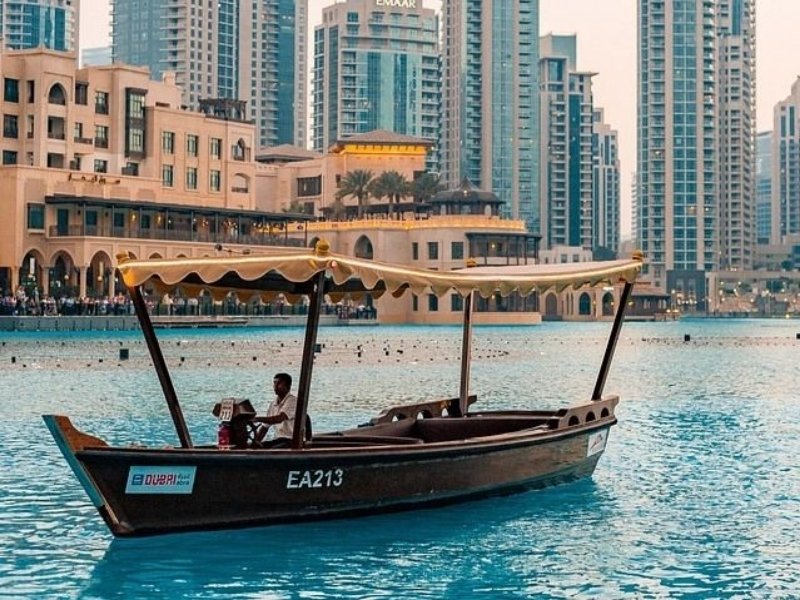
Historic districts developed on both sides: Deira to the northeast and Bur Dubai to the southwest. The Creek remains active, and traditional abras still carry passengers across the water. This simple journey is one of the best ways to understand that Dubai’s story began with trade and movement.

7. An Abra Ride Can Cost Less Than Many Small Souvenirs

Traditional abra crossings remain among Dubai’s most affordable heritage experiences. Fares and routes can change, but a basic Creek crossing has historically cost only a few dirhams or less. The wooden boat offers views of souks, waterfront buildings and working vessels in only a few minutes.

8. Pearling Was Important Before Oil

Pearl diving supported communities across the Arabian Gulf for generations. Divers worked under difficult conditions, while merchants connected natural pearls with international markets. The industry declined after cultured pearls and global economic changes reduced demand.

Dubai then strengthened its role as a trading port. Its development was not a sudden jump from empty desert to oil wealth; it grew through maritime skills, commerce, migration and infrastructure decisions.

9. The Al Maktoum Family Has Ruled Dubai Since 1833

The Al Maktoum dynasty began its rule in Dubai in 1833. The current ruler is Sheikh Mohammed bin Rashid Al Maktoum, who also serves as Vice President and Prime Minister of the UAE. Dubai’s modern development has been shaped by long-term investment in trade, ports, aviation, tourism and public infrastructure.

10. The UAE Was Formed in 1971

Dubai is older than the federation of the United Arab Emirates. Six emirates, including Dubai, formed the UAE on 2 December 1971, and Ras Al Khaimah joined in 1972. National Day marks this union and is celebrated across the country.

A guided Dubai city tour can help visitors connect historic Creek neighbourhoods with the modern coastline and business districts.

11. Burj Khalifa Is the World’s Tallest Building

Burj Khalifa rises 828 metres and has held the title of the world’s tallest building since opening in 2010. Its height is impressive, but the engineering is equally important. The tower’s shape responds to wind, while its reinforced structure narrows through a series of setbacks.

Visitors can book Burj Khalifa At the Top tickets for selected observation levels. The tower also contains residences, offices, hospitality and technical spaces, so the observation experience covers only part of the building.

12. Dubai Frame Creates a View Between Old and New Dubai

Dubai Frame stands in Zabeel Park and rises around 150 metres. From one side, visitors look towards older districts connected with the Creek; from the other, they see the modern skyline. The concept turns the city itself into a picture.

The Dubai Frame experience also includes galleries about the city’s past and possible future, making it more than an observation deck.

13. The Museum of the Future Is Covered in Arabic Calligraphy

The Museum of the Future has a flowing ring-like form with an open centre. Arabic calligraphy forms part of the windows and exterior skin rather than being added as a simple surface decoration. The architecture was created through advanced digital design and manufacturing.

Inside, Museum of the Future tickets provide access to immersive stories about space, ecology, wellness and technology. It explores possible futures rather than displaying a fixed collection of historical machines.

14. Palm Jumeirah Looks Like a Palm From Above

Palm Jumeirah is a human-made island built through land reclamation. Its layout includes a trunk, fronds and an outer crescent that protects parts of the island. Hotels, homes, beaches and attractions occupy different sections.

The Palm Monorail travels along the trunk and gives visitors a practical elevated view. The island’s shape is much easier to understand from the air or a map than from street level.

15. Dubai Has Built Islands, but Not Everything Offshore Is Finished

Dubai is known for ambitious land-reclamation projects, including Palm Jumeirah and The World islands. Some areas are fully developed, while others have progressed in phases or changed over time. Visitors should avoid assuming every master-plan image represents a completed destination.

16. Dubai Mall Includes Much More Than Shopping

Dubai Mall contains retail, dining, entertainment and visitor attractions in a huge Downtown complex. One of its most recognisable features is the large aquarium tank visible from a public mall area. Paid products provide access to the tunnel, underwater zoo and selected experiences.

Travellers can compare current Dubai Aquarium and Underwater Zoo tickets rather than assuming every aquarium feature is free with mall entry.

17. Dubai’s Culture Is Emirati and International at the Same Time

Emirati culture shapes the city’s public identity, hospitality, national celebrations, clothing, food and social values. At the same time, the large international population has created a daily life influenced by hundreds of communities.

A visitor can eat Emirati breakfast, Indian lunch, Filipino snacks and Levantine dinner in one day. This variety is a result of real migration and trade connections, not only tourism marketing.

18. Islam Is the Official Religion, and Other Faiths Are Practised

Islam is the official religion of the UAE and influences public life, holidays and cultural expectations. Dubai also includes churches, temples and other recognised places of worship. Visitors should respect local laws and behave thoughtfully around religious spaces.

19. Ramadan Changes the Rhythm of the City

During Ramadan, Muslims fast from dawn until sunset. Working hours, attraction schedules and entertainment programmes can change. Iftar brings families and communities together after sunset, while late evenings can become lively.

Rules and customs evolve, so tourists should check current guidance rather than depend on memories from an older visit. Dressing respectfully and avoiding disruptive behaviour are sensible throughout the year.

20. Traditional Clothing Is Practical and Cultural

Many Emirati men wear a kandura, usually a long light-coloured garment, while many Emirati women wear an abaya. Styles vary by person and occasion. Visitors should not treat national clothing as a costume or photograph people without permission.

21. Hospitality Often Begins With Coffee and Dates

Arabic coffee, known as gahwa, may be served in small cups with dates. The tradition represents welcome and generosity. Guests should receive it respectfully and follow the host’s example when uncertain.

22. The Weekend Changed to Saturday and Sunday

The UAE moved its federal working week so that Saturday and Sunday became the standard weekend from 2022, with some variation across sectors. Friday remains an important day for Muslim congregational prayer. Attraction crowds can increase from Friday evening through Sunday.

23. Dubai’s Economy Is Not Mainly Dependent on Oil

One of the most repeated myths is that oil alone built and supports modern Dubai. Oil revenue contributed to early infrastructure, but Dubai deliberately developed trade, aviation, tourism, logistics, real estate, finance and services. An official Dubai overview states that more than 95 percent of the emirate’s economy is non-oil.

Jebel Ali Port, Dubai International Financial Centre, free zones and international air connections illustrate this diversification. The city’s business identity is connected with moving people, goods, capital and ideas.

24. Dubai International Is a Major Global Aviation Hub

Dubai International Airport has repeatedly ranked as the world’s busiest airport for international passenger traffic. In 2025 it handled a record 95.2 million passengers. Its location between Europe, Asia and Africa supports long-haul connections through Dubai.

Passenger rankings can change each year, so claims should always include a date and category. “Busiest international airport” is different from “busiest airport overall.”

25. Tourism Has Reached Record Levels

Dubai welcomed 19.59 million international overnight visitors in 2025, its third consecutive record year according to the Dubai Department of Economy and Tourism. The figure counts international overnight guests, not every airport passenger or domestic visitor.

Tourism depends on a mix of beaches, events, hotels, restaurants, shopping, family attractions, business travel, desert experiences and major transport connections.

26. Jebel Ali Is Central to Trade

Jebel Ali Port and the surrounding free-zone ecosystem helped position Dubai as a logistics and manufacturing hub. The port connects shipping routes while nearby roads, warehouses, businesses and airports support the movement of goods.

27. Free Zones Have Special Business Frameworks

Dubai has multiple free zones focused on sectors such as finance, technology, media, logistics and commodities. They offer specialised licensing and regulatory environments. A free zone is not a law-free area; businesses still follow applicable regulations and the specific authority’s rules.

28. Friday Brunch Became a Social Tradition

Dubai’s hotel and restaurant brunch culture developed into a long social meal with large buffets or set menus. After the weekend change, many venues moved their main brunch to Saturday, while others kept Friday options. The word “brunch” in Dubai can mean a multi-hour dining event rather than a simple late breakfast.

29. Dubai Has a Tropical Desert Climate

Dubai is warm and sunny for much of the year, with hot, humid summers and milder winters. Coastal humidity can make the temperature feel more intense. Outdoor sightseeing is generally most comfortable from October to April or early May, although seasonal patterns vary.

30. The Desert Is a Living Ecosystem

The desert may look empty from a road, but it supports plants, insects, reptiles, birds and mammals adapted to limited water and extreme temperatures. Conservation areas protect important habitats and species such as Arabian oryx and gazelles.

An evening desert safari in Dubai introduces visitors to dunes, sunsets and camp entertainment. It is a tourism activity rather than a guaranteed wildlife tour, so conservation experiences should be chosen separately when wildlife is the main interest.

31. Dubai Has About 72 Kilometres of Natural Coastline in Its Official Fact Sheet

The emirate sits along the Arabian Gulf. Beaches, ports and waterfront development have shaped its economy and lifestyle. Reclamation projects have added new waterfront edges, so claims about the total modern shoreline can differ depending on what is counted.

32. Rain Is Limited but Can Be Intense

Dubai receives little annual rainfall, yet individual storms can be heavy. Roads and outdoor activities may be affected during severe weather. Desert climates are not completely rain-free, and visitors should follow official warnings rather than assuming every day will remain dry.

33. Hatta Shows a Mountain Side of Dubai

Hatta is an exclave of Dubai near the Hajar Mountains. Its rocky landscape, dam, heritage sites and outdoor activities feel very different from the coastal city. Journey time and border geography make it a proper day trip rather than a quick central attraction.

Technology, Transport and Daily Life

34. Dubai Metro Opened on 09/09/09

The Dubai Metro began service on 9 September 2009, a date chosen for its memorable pattern. It expanded the city’s public transport network through automated rail services. The Red and Green lines connect many major districts, while new projects continue to develop.

35. Metro Trains Operate Without Onboard Drivers

Dubai Metro uses fully automated train operation. Staff monitor the network and stations even though there is no driver seated at the front. Passengers can view the track through the front window from permitted cabins.

36. Gold Class and Women-and-Children Cabins Are Different

Metro trains include standard cabins, a paid Gold Class cabin and designated areas for women and children. Entering the wrong cabin can lead to a fine. Platform signs show where each section stops.

37. Addresses Often Depend on Buildings and Landmarks

Dubai uses formal addressing and mapping systems, but people still commonly describe locations through building names, communities and nearby landmarks. Always save the exact map pin for hotel pickups, tour meeting points and delivery instructions.

38. Air Conditioning Shapes Daily Life

Shopping malls, metro stations, indoor walkways and attractions allow the city to operate through intense summer heat. The temperature difference between outdoors and indoors can be large, so a light layer can help visitors who feel cold in air-conditioned spaces.

39. Delivery and Digital Government Services Are Highly Developed

Residents use apps for transport, food, groceries, bills and government services. Digital convenience is a major feature of modern Dubai, although visitors should still protect personal information and use verified applications.

40. Dubai Is Always Changing

New roads, attractions, districts and transport projects appear frequently. A travel guide can become outdated quickly. Opening hours, prices and records should be checked before a visit, especially when a fact depends on a current “largest,” “first” or “busiest” title.

Common Dubai Myths Explained

Myth: Dubai Was Built Only With Oil Money

Reality: Oil supported early development, but trade, aviation, logistics, tourism, finance, real estate and services now drive the diversified economy.

Myth: Dubai Is a Country

Reality: Dubai is one of seven emirates within the United Arab Emirates.

Myth: Dubai Has No History

Reality: Creek communities, archaeology, pearling, trade and the Al Maktoum period all predate the modern skyline.

Myth: Everything in Dubai Is Expensive

Reality: Luxury is visible, but affordable restaurants, public beaches, abras, metro travel and free public areas also exist.

Myth: The Desert Is Empty

Reality: Desert ecosystems contain specialised plants and wildlife, while conservation programmes protect vulnerable habitats.

Myth: Every Dubai Attraction Is Indoors

Reality: Beaches, souks, desert tours, mountain trips, parks and seasonal outdoor destinations are important parts of the experience.

How to Experience These Facts During a Visit

  1. Start around Dubai Creek and cross by abra.
  2. Explore Al Fahidi or another heritage area respectfully.
  3. Use the Metro to understand the modern city’s scale.
  4. Visit one observation attraction rather than rushing through several.
  5. Try Emirati food and learn basic Arabic greetings.
  6. Spend a separate evening in the desert.
  7. Compare Downtown, Jumeirah and older Creek neighbourhoods.
  8. Check current official sources whenever a record or rule matters.

A Dubai speedboat tour adds a coastal perspective, showing how Palm Jumeirah, beachfront towers and marine landmarks connect from the Arabian Gulf.

Frequently Asked Questions

Q: Is Dubai a city or a country?

Answer: Dubai is an emirate within the United Arab Emirates, and its main urban centre is also called Dubai. It is not an independent country.

Q: What is Dubai most famous for?

Answer: Dubai is known for Burj Khalifa, aviation, trade, luxury hospitality, beaches, artificial islands, shopping, family attractions and rapid urban development.

Q: What language is spoken in Dubai?

Answer: Arabic is the official language. English is widely used, while many residents also speak Hindi, Urdu, Malayalam, Tagalog and other languages.

Q: What currency does Dubai use?

Answer: Dubai uses the UAE dirham, abbreviated AED. One dirham is divided into 100 fils.

Q: Does Dubai depend mainly on oil?

Answer: No. Oil helped fund early infrastructure, but Dubai’s economy is now highly diversified across trade, aviation, logistics, finance, tourism, real estate and services.

Q: How tall is Burj Khalifa?

Answer: Burj Khalifa is 828 metres tall and has held the world’s tallest-building title since opening in 2010.

Q: Why was Dubai Creek important?

Answer: The Creek provided a natural harbour that supported settlement, fishing, pearling, shipping and regional trade between Dubai and international ports.

Q: Is Dubai safe for tourists?

Answer: Dubai is widely regarded as a safe destination, but visitors must follow UAE laws, protect valuables and take normal travel precautions.

Q: What is the best time to visit Dubai?

Answer: October through April or early May usually offers more comfortable outdoor weather. Summer suits indoor attractions but can be extremely hot and humid outside.

Q: Can tourists use Dubai Metro?

Answer: Yes. Visitors can buy or top up a Nol card and use the Metro, buses and other compatible public transport services.

Q: Is Palm Jumeirah a natural island?

Answer: No. Palm Jumeirah is a human-made island created through land reclamation and designed in the shape of a palm tree.

Q: How many international tourists visit Dubai?

Answer: Dubai welcomed 19.59 million international overnight visitors in 2025, according to the Dubai Department of Economy and Tourism.

Final Thoughts

Dubai is fascinating because old and new ideas exist beside one another. Abras still cross the Creek while driverless trains move through modern districts. Traditional hospitality continues inside a city shaped by international communities, digital services and ambitious architecture.

The best facts are not simply records. They explain how trade, geography, leadership, migration and planning transformed Dubai while its Emirati identity remained central. Explore beyond the skyline, question popular myths and check changing claims against current official sources.